
Issue, Numbering, and Inspection of Military Truncheons
How War Department and Military Police Truncheons Were Controlled in Service
Once a truncheon had been manufactured to specification and accepted into service, it did not simply become a generic piece of equipment. Within the War Department Constabulary and later military police units, truncheons were treated as controlled items, individually issued and subject to inspection.
This is an important distinction. These were not anonymous batons pulled from a rack as required. Each truncheon was accounted for, marked, and associated with an individual officer.
Individual Issue and Numbering
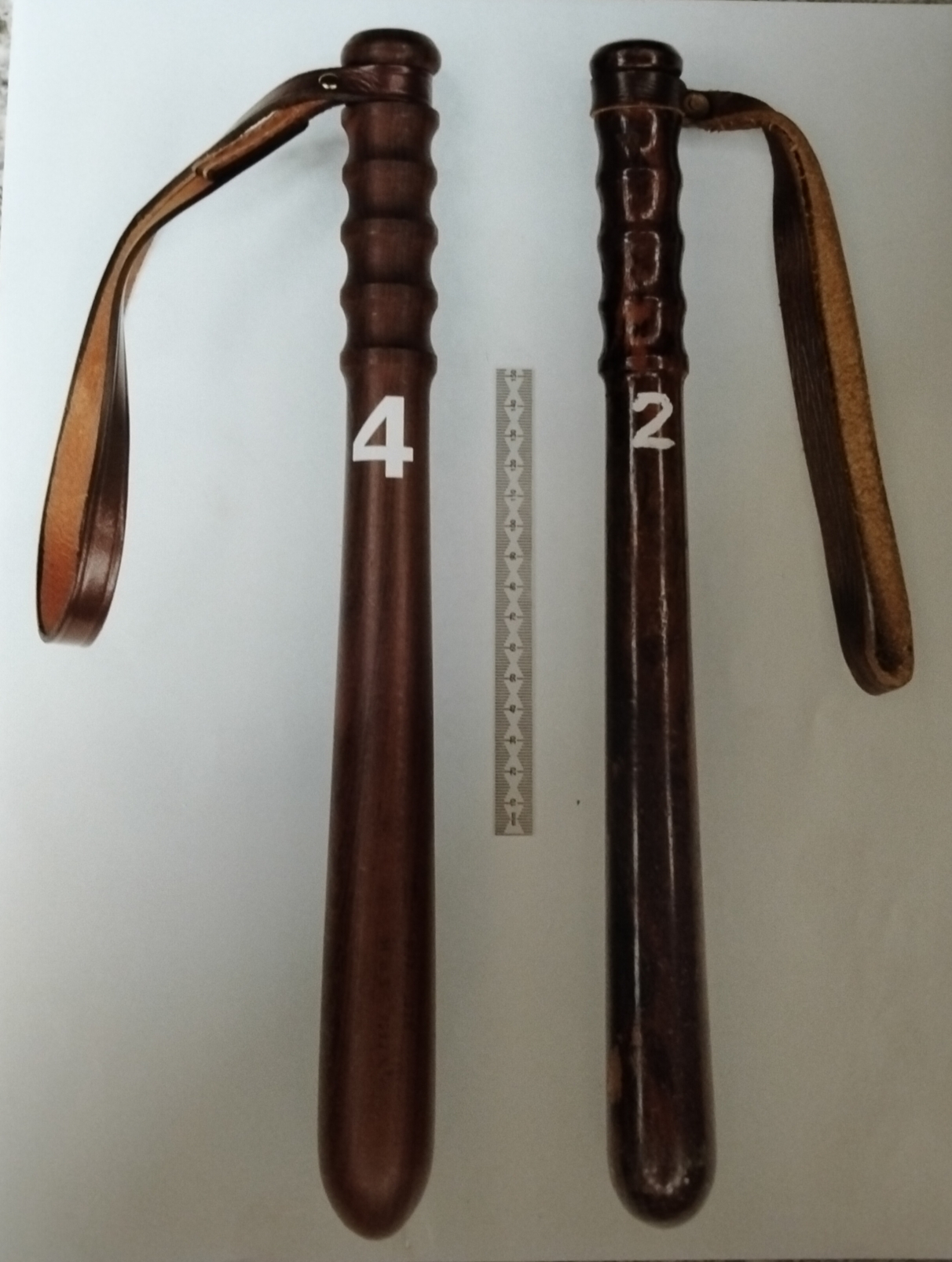
Both the Royal Military Police (RMP) and the Royal Air Force Police (RAFP) operated systems under which truncheons were individually issued and numbered.
The numbering was applied directly to the truncheon and served a practical purpose. It allowed each item to be linked to its issued holder and made it possible to track condition, damage, or loss.
Surviving examples show that numbering practices differed slightly between services. RMP numbers were typically smaller and more discreet, while RAFP markings are often larger and more conspicuous. Both approaches reflect the same underlying requirement for accountability.
Carriage and Use in Service
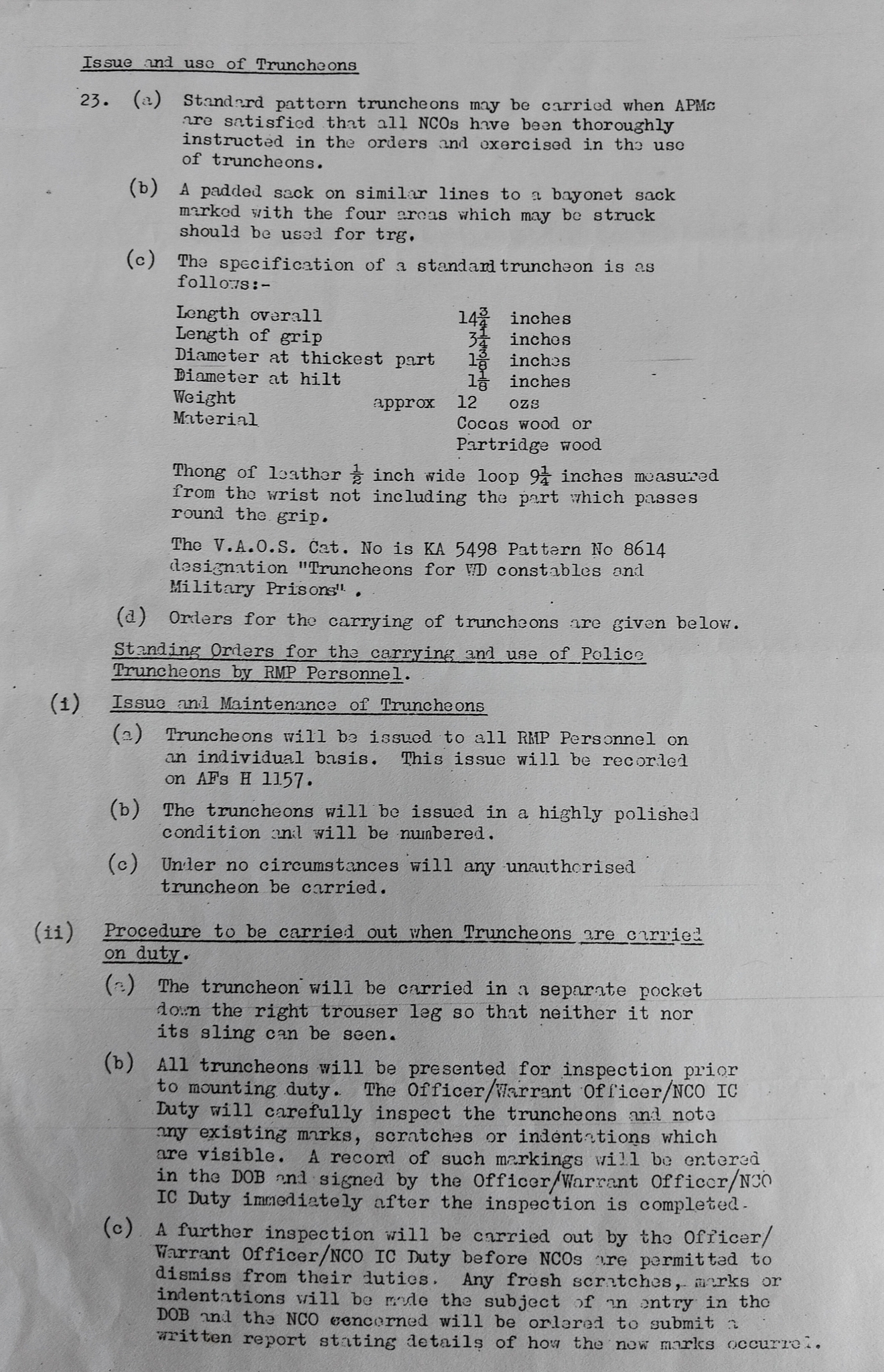
Instructions governing the carrying of truncheons were explicit. Military police were not free to improvise how or where the truncheon was worn.
In service, truncheons were commonly carried concealed down the trouser leg, rather than worn openly. This reflected their role as a controlled instrument rather than a visible symbol of authority, particularly in military environments where overt display was not always appropriate.
Unauthorised truncheons were not permitted. Officers were expected to carry only the truncheon issued to them, and only in the prescribed manner.
Inspection Before and After Duty
Inspection formed a routine part of truncheon control.
Before duty, truncheons were examined to ensure they were serviceable and free from damage. After duty, they were inspected again. Any fresh marks, dents, or signs of use were expected to be accounted for.
This process was not cosmetic. The aim was to ensure that any use of force could be identified and justified, and that damage did not go unnoticed or unreported.
Appointments and Formal Inspection
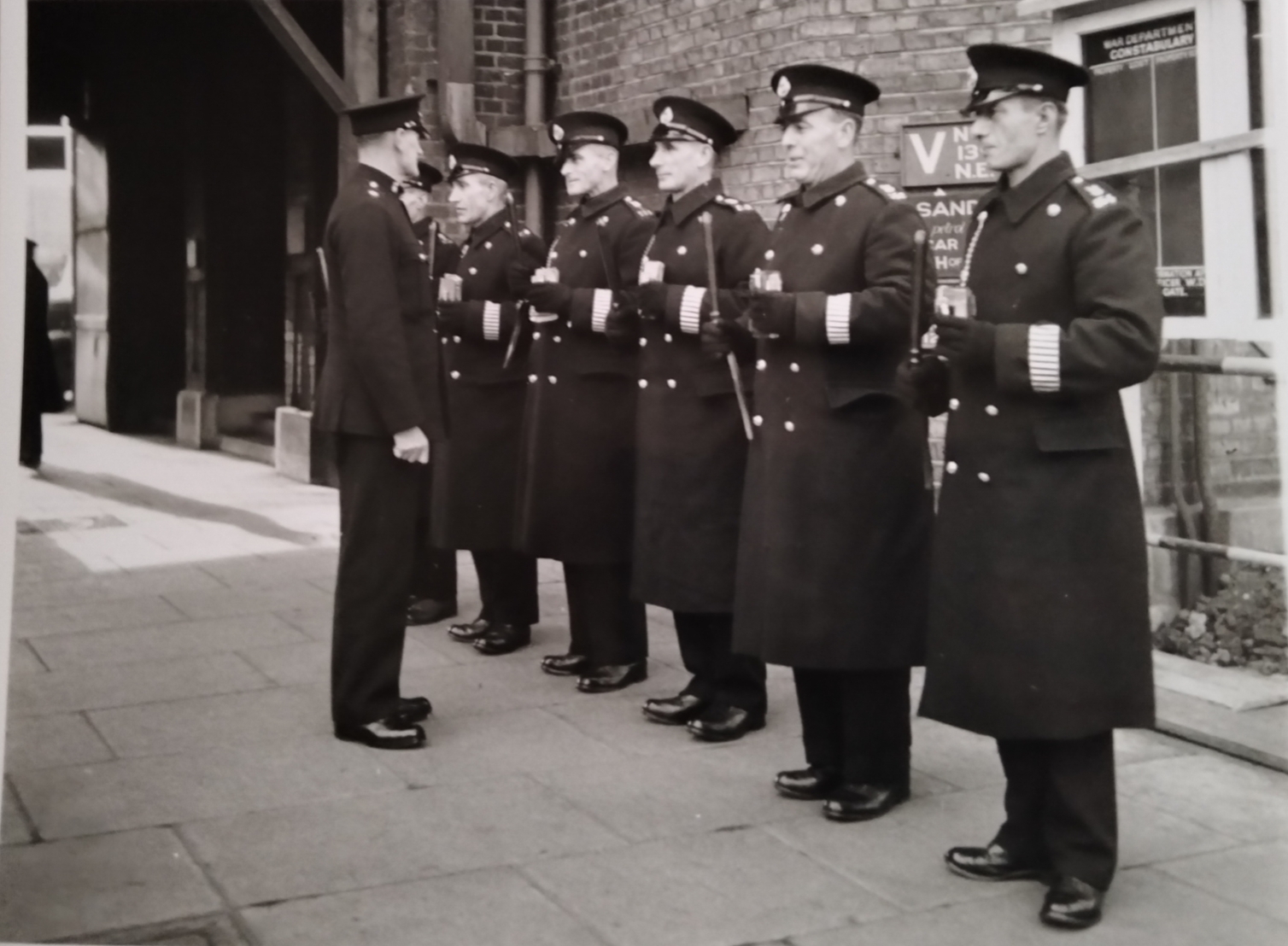
The truncheon formed part of a wider set of issued equipment, collectively referred to as an officer’s appointments. These were subject to formal inspection by senior officers.
Period photographs show members of the War Department Constabulary presenting their appointments for inspection, including truncheons, in a manner that will be familiar to anyone with military experience.
Such inspections reinforced the idea that the truncheon was not a personal possession, but government property entrusted to the individual.
Post-War Continuity
Post-war photographs from the same locations show that these practices continued well into the mid-twentieth century. Despite changes in organisation and eventual amalgamations, the basic principles of issue, inspection, and accountability remained.
This continuity explains why many surviving truncheons show signs of careful long-term use rather than casual wear. They were looked after because they were inspected, recorded, and traceable.

Why This Matters to Collectors
Understanding how truncheons were issued and controlled is essential when assessing surviving examples.
Numbering, wear patterns, and even minor damage can all make sense when viewed through the lens of service use and inspection regimes. What might otherwise appear to be inconsistency or anomaly is often simply evidence of proper military control.
Seen alongside the original specifications and later amendments, these practices complete the picture. The truncheon was designed to a standard, adapted under wartime pressure, produced by multiple firms, and then carefully controlled throughout its working life.
If you want a traditional British police-style wooden truncheon, we sell a replica of a 1960s Leeds City Police issue, complete with leather lanyard, at a very reasonable price.
Click the button below to find out more.