
Truncheon Makers, Materials, and Why No Two Are Quite the Same
Once the War Office truncheon specification existed on paper, it still had to be turned into something real. That job fell not to a single government workshop, but to a number of regional firms contracted to supply truncheons that met the required standard.
This is where theory and reality begin to diverge.
Although the specification defined dimensions, form, finish, and approved materials, it did not mandate a single supplier, nor did it require all truncheons to be produced in one place. As a result, multiple firms supplied truncheons at different times, often interpreting the same requirements in subtly different ways.
Known War Office Truncheon Suppliers
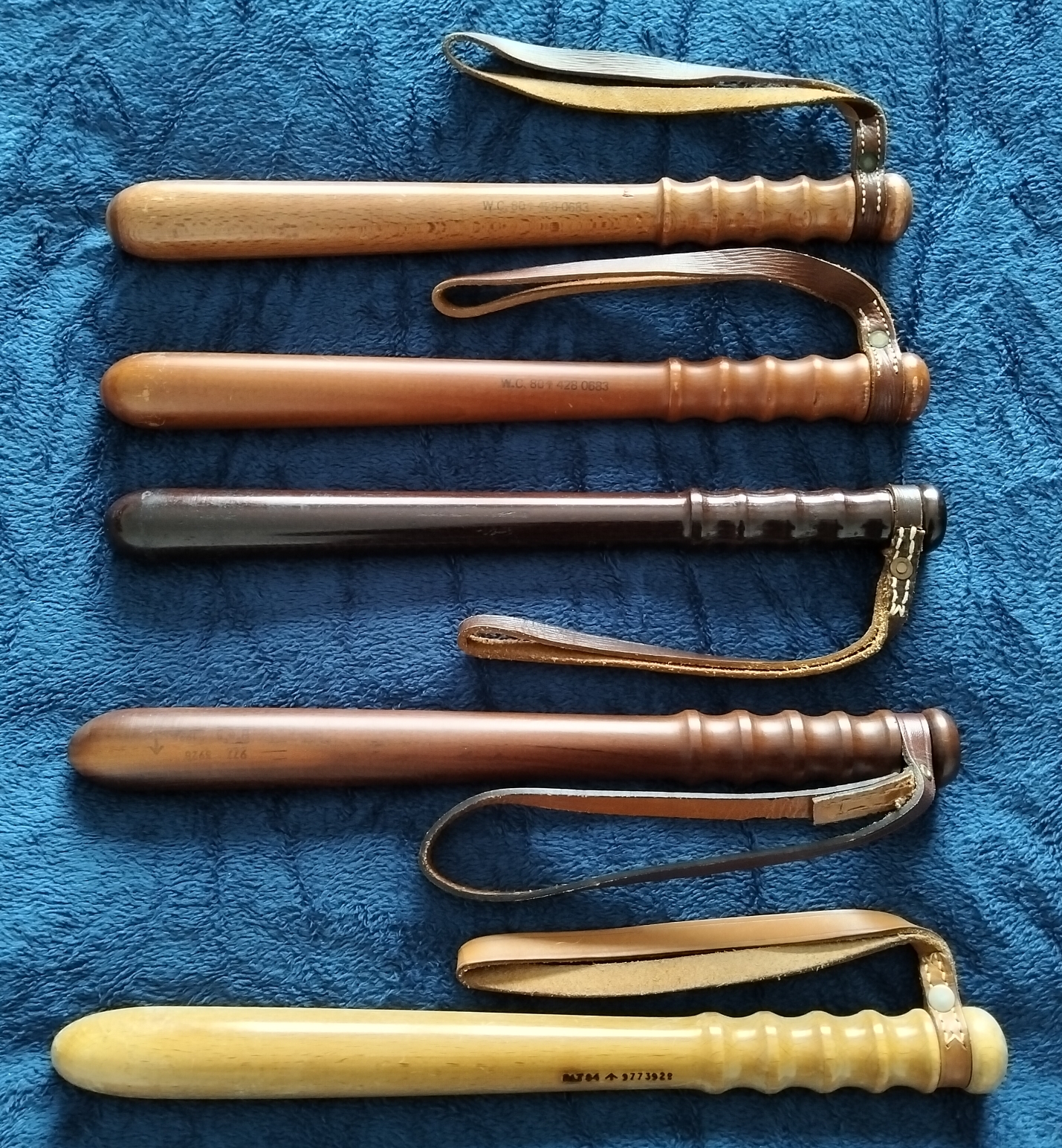
Surviving examples and contractor markings show that War Office truncheons were produced by several British firms. Among the best documented are:
- W. Clements (Leicester)
- Brettells (Forest Gate, London)
- R. L. Trim (Cerne Abbas)
- Rudder & Paynes (Warwickshire)
All of these firms have long since ceased trading. Their output survives only in the truncheons themselves and the markings applied at the time of manufacture.

Materials in Practice
The 1926 specification originally approved two exotic hardwoods, with further substitutions authorised during wartime. What survives today reflects that layered history.
Examples are known turned from:
- Densified beech (often referred to by the trade name Lignestone)
- Partridgewood
- Other dense tropical hardwoods, including woods marketed as partridgewood, but botanically distinct
Densified beech appears frequently in wartime and post-war examples. Beech was readily available in Britain, and when compressed and impregnated, produced a strong, uniform material well suited to hard service use.
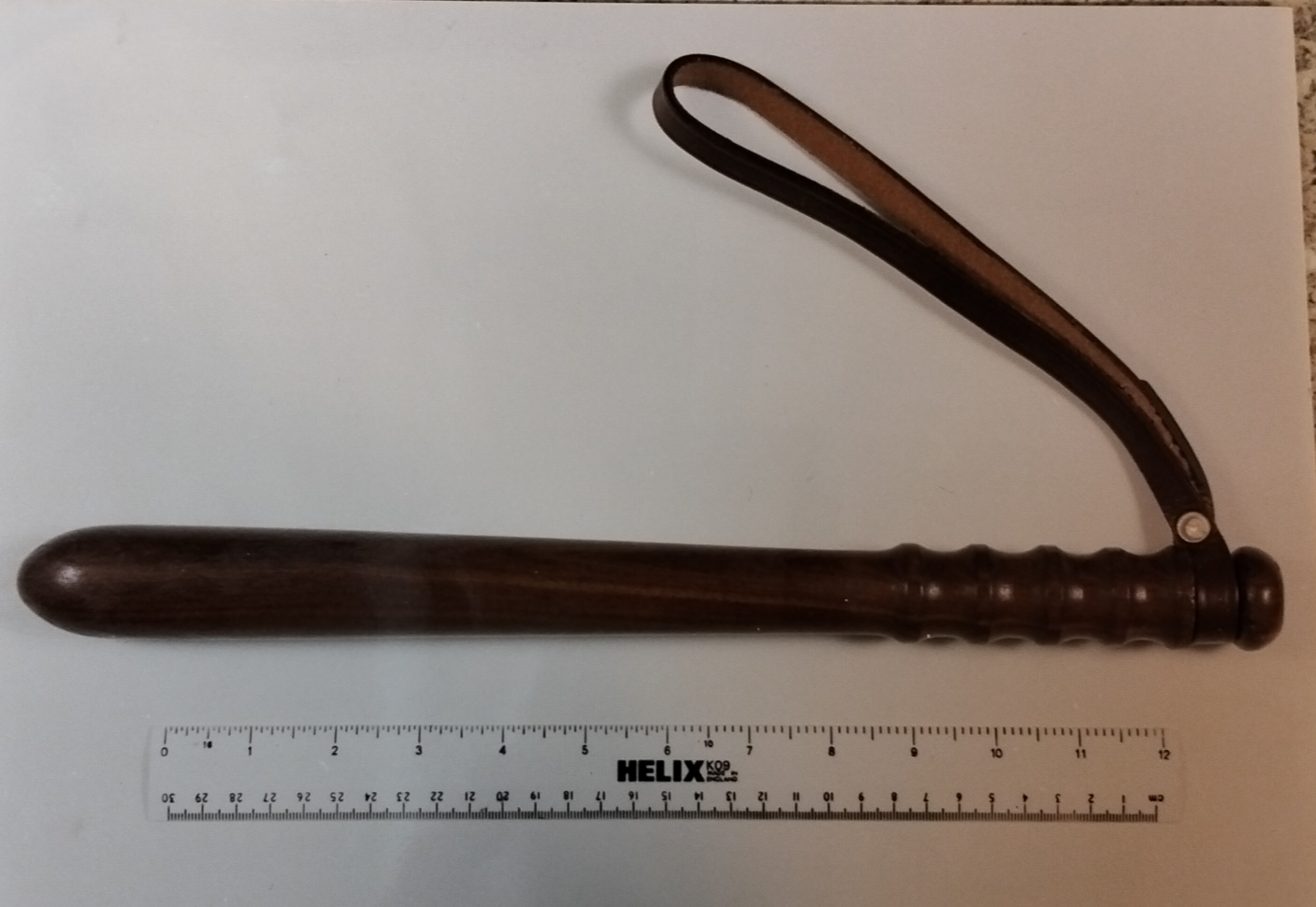
Some truncheons supplied under the same general specification are turned from tropical hardwoods that differ noticeably in colour and grain. In at least one documented case, a wood marketed under a familiar trade name is not the same species originally specified, illustrating how commercial naming and material substitution could drift over time.
Why Correct Examples Look Different
Collectors often assume that variation implies error, replacement, or unofficial production. In the case of War Office truncheons, that assumption is usually wrong.
Once multiple woods were formally authorised, and once supply was spread across several manufacturers, variation became inevitable. Two truncheons can be entirely correct, entirely original, and yet look markedly different in colour, weight, and grain.
Markings and Attribution
The requirement for contractor identification and year of supply is what allows many surviving truncheons to be attributed with confidence today.
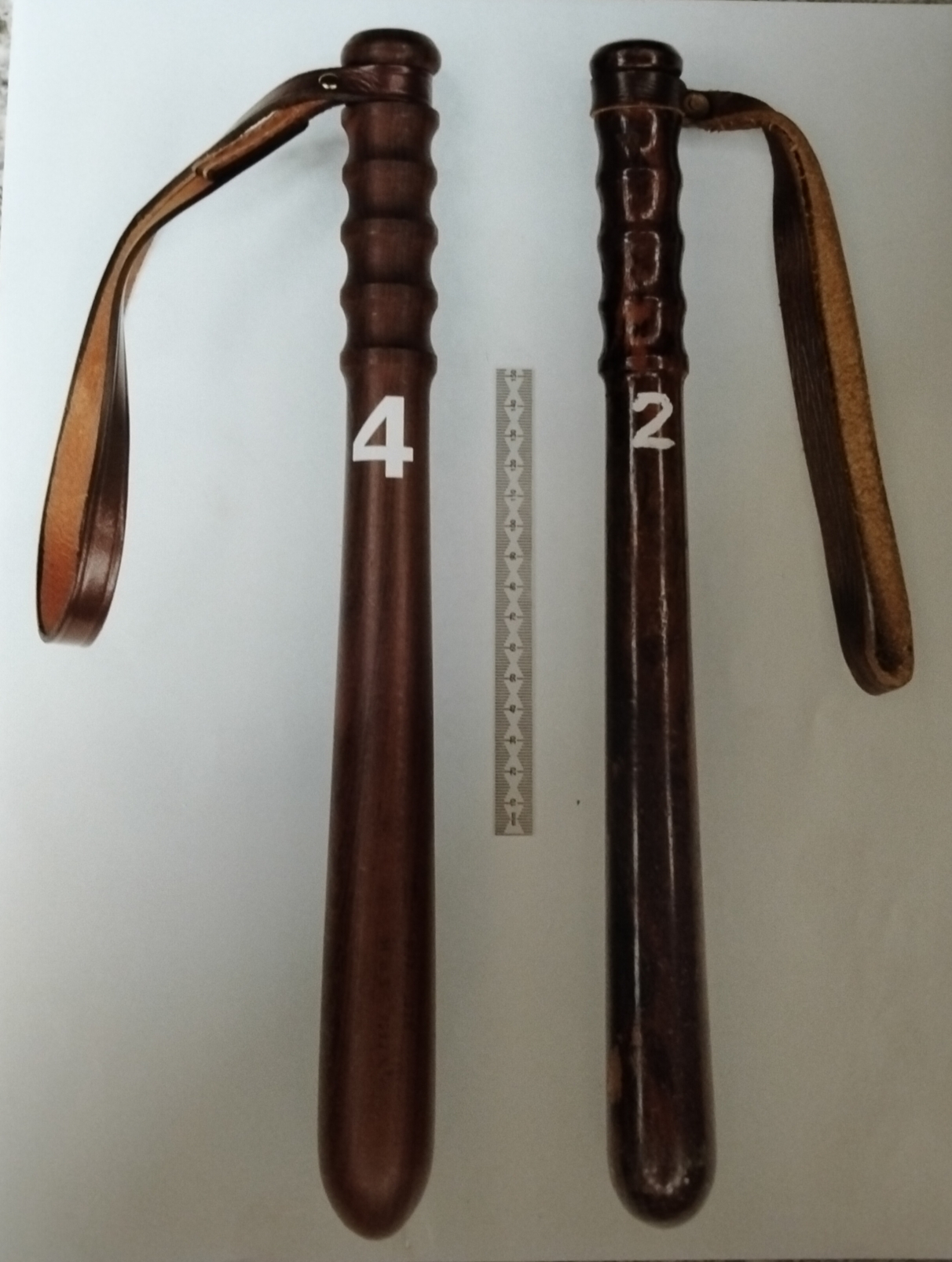
Names, initials, or recognised trade marks stamped above the grip provide the link between the object and the firm that produced it. In some cases, these markings are faint or partially worn, but when present, they are invaluable for understanding who made what, and when.
The Missing Pieces
Despite the number of surviving examples, gaps remain. At least one known supplier, Rudder & Paynes of Warwickshire, is documented but not yet represented by a confirmed surviving truncheon.
This is a reminder that what survives today is only a fraction of what was originally produced. Attrition, disposal, and loss over decades of service mean the record will never be complete.
Why This Matters
Understanding who made War Office truncheons, and from what materials, is essential if later examples are to be judged fairly.
Variation does not imply non-standard production. In most cases, it reflects a specification that was flexible by design, adapted under wartime pressure, and executed by multiple independent firms.
Seen in that light, the diversity of surviving War Office and early Ministry of Defence truncheons is not a problem to be explained away, but evidence of how the system actually worked.
If you want a traditional British police-style wooden truncheon, we sell a replica of a 1960s Leeds City Police issue, complete with leather lanyard, at a very reasonable price.
Click the button below to find out more.